Nobody risks twelve dollars on a stranger
Target found a bedding brand on TikTok Shop, Snap says discovery runs through the group chat, and NielsenIQ says shoppers are buying one can at a time. Four trends from Saturday's show, with a post, a still and a video for each.

Listen to this episode of The Weekend Trend Report, then use the piece below.
Target is putting a bedding brand that didn't exist two years ago into 550 stores starting tomorrow, October 18. Mellow Sleep launched in 2025 on TikTok Shop and its own website, did $130 million in its first year, and says it's on track to end year two above $300 million, according to Modern Retail. Target made the first call, last spring, less than a year after the TikTok Shop launch. Co-founder Jay Yue says the buyer who reached out was already a fan.
My read on the week: the gatekeepers moved, and most small food brands are still knocking on the old door. The buyer is scrolling on the couch. The recommendation happens in a group text your analytics can't see. And the shopper on the other end has a smaller household, a smaller budget and, in one home out of five, a smaller appetite. Four trends from Saturday's show, two from the feed and two from the shelf, with a move for each one you can ship this week.
1. TikTok Shop is the audition tape
Look at why Target wanted Mellow. Its home category fell $1.09 billion in fiscal 2025, a 6.5% drop, and Modern Retail, citing Home Textile Today, counts it as the third straight year that category lost more than a billion. The giant came to the small brand because the small brand had proof in public: strangers arguing about sheets in the comments, with a sales number sitting right next to the argument.
The food version landed the same week. EZ Bombs, the birria seasoning bombs, says it sold more than a million units through TikTok Shop in 2025 and went from zero retail doors at the start of that year to more than 8,000, Walmart, Target, Costco and Kroger among them. It just closed a $25 million Series A led by Cavu Consumer Partners. A seasoning ball beat plenty of brands with a broker and a trade show booth onto those shelves, because a few thousand people cooked birria on camera first.
How those wins happen is less glamorous. Digiday's Future of TV Briefing ran numbers from a Flywheel report built on data from Reacher, a TikTok Shop affiliate tool. Brands sent 1.5 million samples to creators; 47% turned into a video and 14% generated a sale. Creators who posted 20 or more videos averaged $74.07 in sales per video, against $7.19 for a single video, and smaller creators likely bring in more per thousand followers than the big names. Flywheel Ventures CEO Deren Baker put it flat: "Direct response is a much more efficient way to generate sales if that's your goal."
So more than half the free product goes into a closet. Fine. That's old affiliate math, and it's the one fight a four-person salsa company can win against Big Food. You can't outbid them for one famous face. You can out-ship them on samples to two hundred home cooks with eight thousand followers each, and pay those cooks a cut of what they sell.
The move. Seed fifty creators under 50,000 followers this month, on commission, and expect half of them to never post. Keep a sheet of who posts, how often, and what sold. In that data the money sat with the people who kept posting, so send your repeat posters the next product before anyone else sees it, and stop shipping boxes to the one-and-done unboxers. Write the brief as one sentence and one shot. If a creator can't explain your product in fifteen seconds while holding it, the brief is too long.
Paste this on your own feed to recruit them: We're sending free [PRODUCT] to 50 home cooks this month. Under 50K followers is perfect. Cook something with it, post it, and keep [X]% of every sale through your link. Comment COOK and we'll DM you.
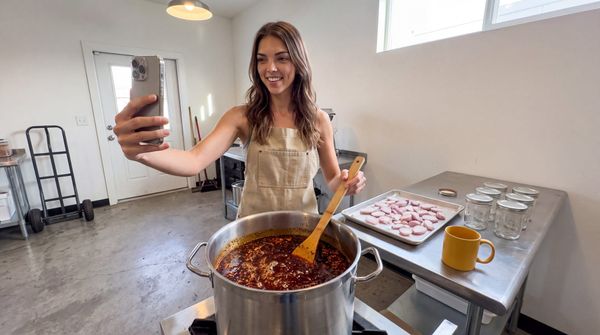
The still: your product in a stranger's kitchen mid-cook (a creator's, with permission), the burner on, one hand in frame, the counter a little messy. Shot straight on at counter height. That's the picture the buyer sees when she opens the app, so stop sending her the white-sweep product shot.
The video, 20 seconds, four shots, and it doubles as the example you send every creator. Shot one, 3 seconds: the box landing on a counter and torn open by hand. Shot two, 7 seconds: the product going into the pan, sound on. Shot three, 6 seconds: the finished plate and the first bite. Shot four, 4 seconds: straight to camera with the price said out loud and "link's below." Then let every creator wreck it in their own style. That's the point of sending fifty.
2. The recommendation moved into the group chat
Snap released a study of more than 17,000 digital map users, ages 13 to 44, across the U.S., Canada, the U.K., France, Germany and Saudi Arabia, run with eye square and Horizon. The headline Snap wants you to read: people are 2.9 times more likely to say they discovered their favorite real-world business on Snapchat than on other social apps, and Snap Map reaches 450 million monthly users. Social Media Today did the math underneath it. About 29% of map users use it to discover businesses. 76% use it to see where their friends are.
Snap's own holiday guide, "Wrapped in the Chat," eight pages, out October 12, says the quiet part plainly: "Holiday shopping is no longer an isolated consumer action." Somebody finds a thing, drops it into a small group, and waits for a sister or a friend to say yes before buying.
I believe that one, because I do it. Somebody texts me a picture of a hot sauce with three words, "you need this," and I buy it. I never saw an ad. I never searched for it. The brand will never know where that sale came from, because it happened in a DM and a screenshot that got passed around four phones, and on the dashboard it shows up as "direct" or as nothing at all. Then a small brand looks at that dashboard, decides social doesn't work, and buys the ads the platform can measure (which is exactly why the platform sells them). You end up paying for the attention you can count and ignoring the attention that moves product.
The move. Build every product post for the trip it's about to take. When I forward your post to my sister, the caption usually doesn't make the trip; she gets a screenshot. So the image carries everything: name, price, where to buy it. Then make shares and sends the number you report every week, ahead of likes and follower count. It's already sitting in your Instagram and TikTok insights. Nobody reports it because a share count looks small on a Monday slide, and a post sent forty times is doing more for you than one with four hundred likes.
Paste this as the caption, and put the same three facts on the image itself: [PRODUCT NAME]. $[PRICE]. At [STORE, CITY] or [SHORT LINK]. Send this to the one person in your group chat who'd fight you for the last one.
The still: the product held up at arm's length somewhere ordinary (a kitchen counter, a cupholder, a tailgate), with a clean strip of the frame left empty for three lines of type. Then test it. Screenshot the post on your own phone, crop the caption off, and ask whether your sister could buy it from what's left. If she couldn't, reshoot.
The video, 15 seconds, three shots, built to be forwarded. Shot one, 4 seconds: a phone lighting up with a text that's just a photo of your product and "you need this." Shot two, 7 seconds: the product opened and tasted, one honest reaction, no voiceover. Shot three, 4 seconds: the product held to camera with name, price and store on screen. Keep the type on screen from the first frame to the last so it still sells on mute, and still sells after somebody screen-records it.
3. The shopper is buying one can at a time
NielsenIQ data reported by Grocery Dive says smaller packs are outgrowing multi-serve packs in soft drinks, ready-to-eat cereal and salty snacks, three aisles Big Food spent decades training us to buy family size. Stock-up trips are now an estimated 32% of in-person grocery purchases and 19% online. The average household slipped from 2.6 people in 2000 to 2.5. And 21% of U.S. households had at least one GLP-1 user as of May. The report's own verdict is that "pack architecture hasn't kept up with the changes."
A tenth of a person sounds like nothing until you multiply it across the country. The GLP-1 number is the one I'd tape to the wall at a snack brand. One household in five has somebody in it who simply eats less. That person still buys snacks. They buy the smaller bag, they want the protein or fiber number where they can see it, and they read the back of the pack a lot harder than they did two years ago.
Big Food's answer for a decade has been to shrink the bag and keep the price; shoppers caught it and named it shrinkflation. A small brand that sells a smaller pack straight, priced as a first try, is on the right side of that fight. And the single-serve shopper is the one person willing to gamble four dollars on a name they've never heard of. The family-size shopper buys what they bought last time. Nobody risks twelve dollars on a stranger.
The move. Retire the pyramid of ten bags and the table for twelve until Christmas, when somebody sets one again. That photo talks to a household that's shrinking; the person scrolling at eleven at night is one person, maybe two, wondering if you're worth four bucks. Shoot your smallest format life size in one hand, say the price in the first three seconds, and rewrite this month's recipe and serving posts for one or two people.
Paste this: This is the small one. $[PRICE], [SIZE], enough for one night, not a party. Like it? The big one's on the shelf right next to it. Don't like it? You're out [PRICE], not twelve bucks.
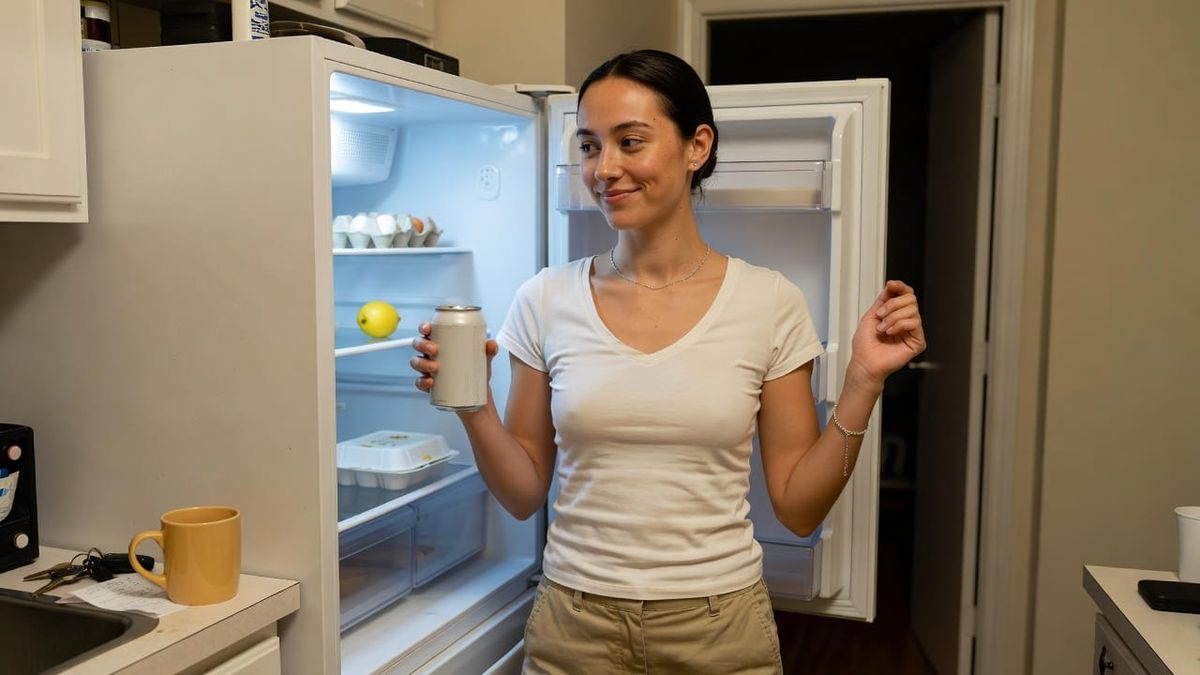
The still: one can or one small bag in one hand, in a one-bedroom kitchen at night, the fridge open behind it with a half-empty shelf. Fridge glow plus the overhead light. No spread, no second flavor, nothing that says party.
The video, 18 seconds, four shots. Shot one, 3 seconds: the single unit in a hand at the fridge, price said on camera. Shot two, 5 seconds: opened, poured or torn, sound up. Shot three, 6 seconds: one person on a couch, one glass or one bowl. Shot four, 4 seconds: the empty can or bag set down on the counter, and "that's a Tuesday" on screen.
4. Halloween got a budget
A LendingTree survey of 2,000 U.S. consumers, written up by Retail Dive on Friday, puts the average Halloween plan at $162 this year, down 16% from $192 in 2025. Sixty-one percent said they'd skip some purchases. Candy led the cuts at 35%, ahead of decorations at 31% and costumes at 29%. And 24% expect to pay for Halloween with debt.
Two weeks out from the one holiday that runs on candy, candy is the first thing on the chopping block. Stack it next to the pack data and you get the same shopper twice: fewer people in the house, less money in the account, less appetite at the table. The brands still shooting an overflowing cauldron of fun-size bars are talking to a porch that isn't there this year.
The move. Skip the haul shot and make two Halloween posts. One is about the small bag worth handing out on one porch. The other is for the grown-ups who skipped the candy aisle and still want something for themselves on the 31st. Both are true this year, and almost nobody in the aisle is saying either one.
For the porch: One bag. One porch. [NUMBER] kids, give or take. $[PRICE], and you're the house they talk about on the walk home.
For the grown-ups: Skipped the candy aisle this year? Same. Here's the one treat that's just for you on the 31st. [PRODUCT], $[PRICE], at [STORE]. Don't share it.
The still: one small bowl on a porch step at dusk with your product in it, the porch light on, a single carved pumpkin at the edge of the frame. No mountain of candy. One bowl somebody could fill with what's in their wallet.
The video, 20 seconds, four shots. Shot one, 4 seconds: a hand setting the bowl on the step as the porch light clicks on. Shot two, 6 seconds: low angle on the bowl, a costume sleeve reaching in (your own kid or a willing niece, with a parent's okay, face out of frame). Shot three, 6 seconds: cut inside to an adult on the couch opening the one package they kept for themselves. Shot four, 4 seconds: the product to camera with price and store on screen.
Your move this week: take the smallest thing you sell, shoot it in one hand with the price on the image, and send it to fifty home cooks who'll forward it to their group chats.
This piece extends Saturday's Weekend Trend Report, where Chloe Dawn and I went through the week; the episode covers a little more ground than this write-up does. The show is the briefing, the article is the build, and the post is what you ship. Subscribe to The Daily Trend Report on Apple Podcasts or Spotify. The Weekend Trend Report runs there every Saturday, and The Week Ahead follows tomorrow in the same feed.
I build organic social strategy for food and beverage brands: who your customers are, where they talk about you, and what to post so they bring their friends without a dollar of paid behind it. If your posts aren't making the trip to the group chat, message me on LinkedIn.